.svg)
Last year, while talking to Chetna for a story on foraging in the Dolomites, I asked her, "what is the slowest thing you've done during your time in the mountains?"
“I made wine with Massi,” she said.
The answer stayed with me. She wrote a poem about it, following the wine from harvest to bottle. Fragments of it appear throughout this story.
A year later, as vineyards across Europe enter harvest season once again, it felt like the right time to return to that answer.
Before the Dolomites had a vineyard to tend, before grapes climbed their rocky slopes, Chetna thought of wine much the way most of us do—as something to savour.
That changed during a conversation with a natural winemaker in France.
As he spoke of wild yeasts, spontaneous fermentation and ancient methods that long predated industrial production, Chetna didn't yet realise she was being invited into a slower way of seeing the world.
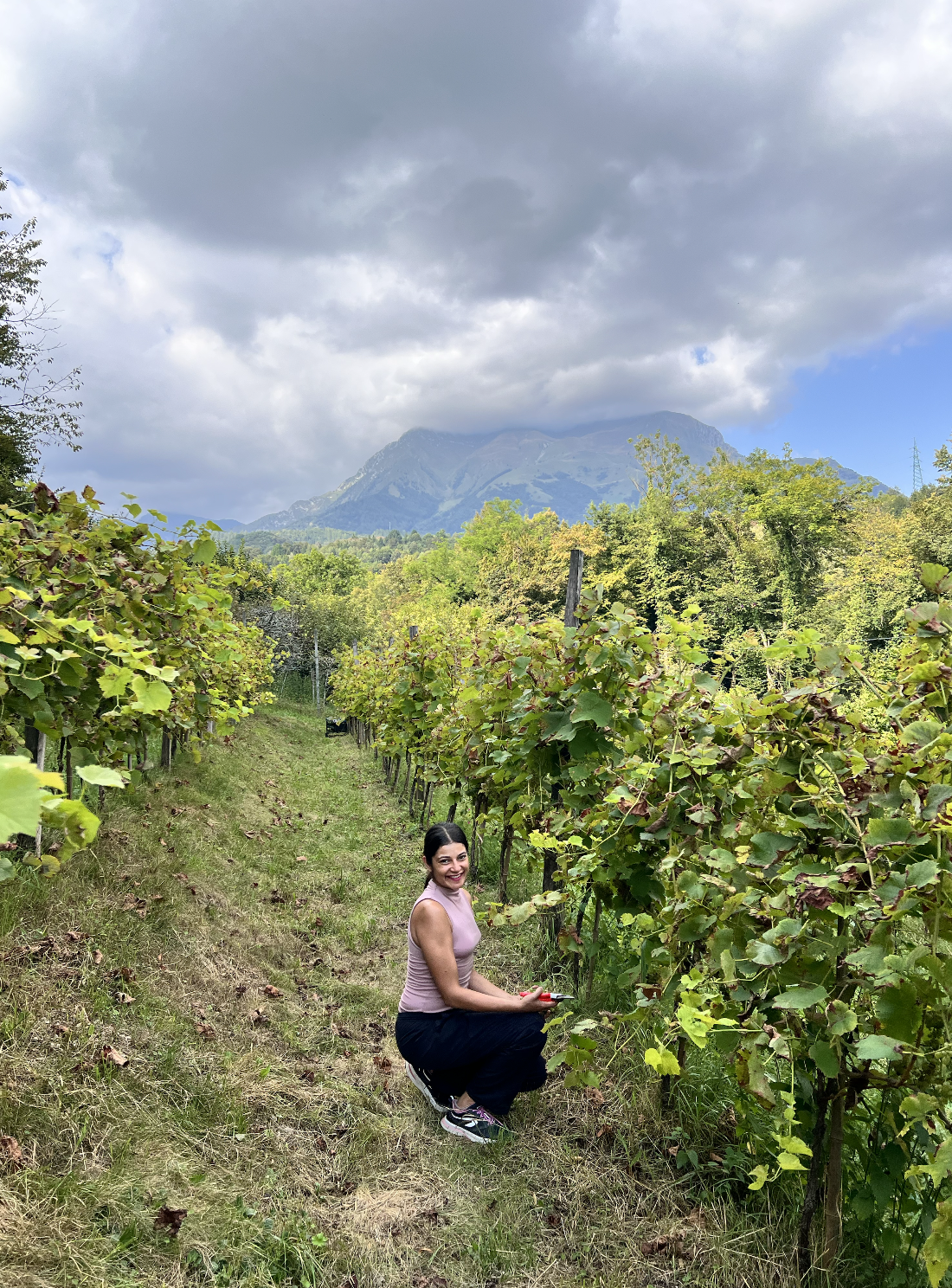
Years later, she and her partner, Massimiliano, planted a small vineyard at their home in the Dolomites.
A vineyard was born in the slumber of Covid,
on the rocky bed of the mighty Dolomites.

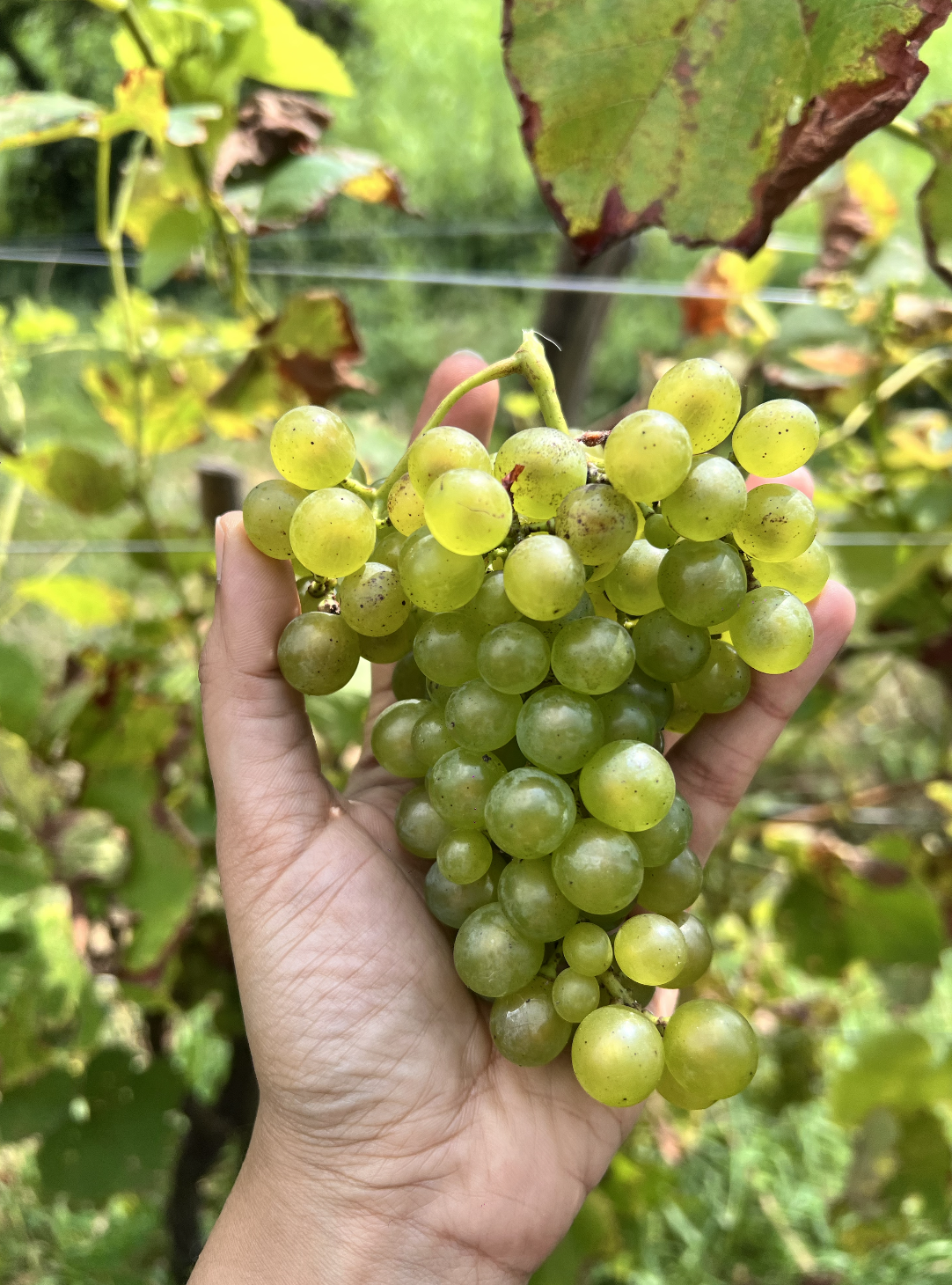
They brought home Solaris, a resilient grape variety developed to withstand disease and an increasingly unpredictable climate. There is something quietly hopeful about that choice. A grape that doesn't resist change, but learns to live with it.
For Chetna and Massimiliano, that resilience feels deeply aligned with the philosophy of natural wine itself.
Wine, they tell me, has always belonged to slow processes. Long before modern interventions, fermentation happened through native wild yeasts already living on the grapes. White grapes were left to macerate with their skins, drawing out colour, texture and tannins to create what we now call orange wine. Today it feels innovative. In truth, it is ancient.
Communion of ancient souls.
Native wild yeasts.
Spontaneous fermentation.
Everything begins by hand.
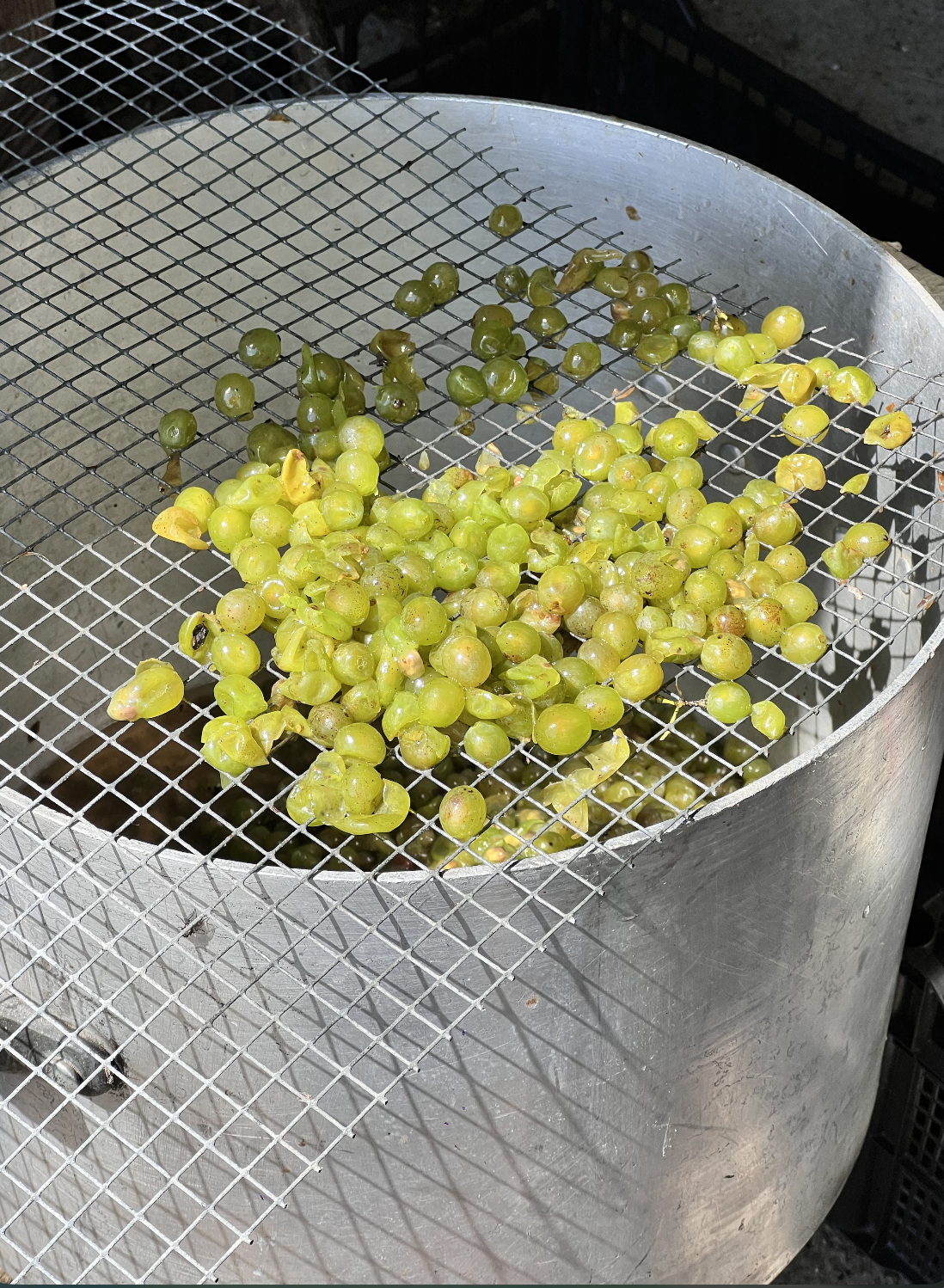
The grapes are harvested, then gently de-stemmed over a simple metal mesh, a traditional technique that favours patience over efficiency. The fruit is crushed and the juice is left in contact with its skins. Rich with natural sugars, it waits.
Then, almost imperceptibly, something begins.
"Alchemy of the sacred skins.
Macerating gems, breaking hearts open."
Native yeasts awaken. Sugars slowly transform into alcohol. Tiny bubbles begin to rise through the vessel.
"It's my favourite part of the whole process," Massimiliano tells me. "It's the sign that everything you've worked towards throughout the year has arrived at this moment."
Months of tending the vineyard—pruning through winter, watching the vines awaken in spring, caring for the fruit through summer, harvesting at precisely the right time—culminate in those first bubbles. It is the beginning of grapes becoming wine.
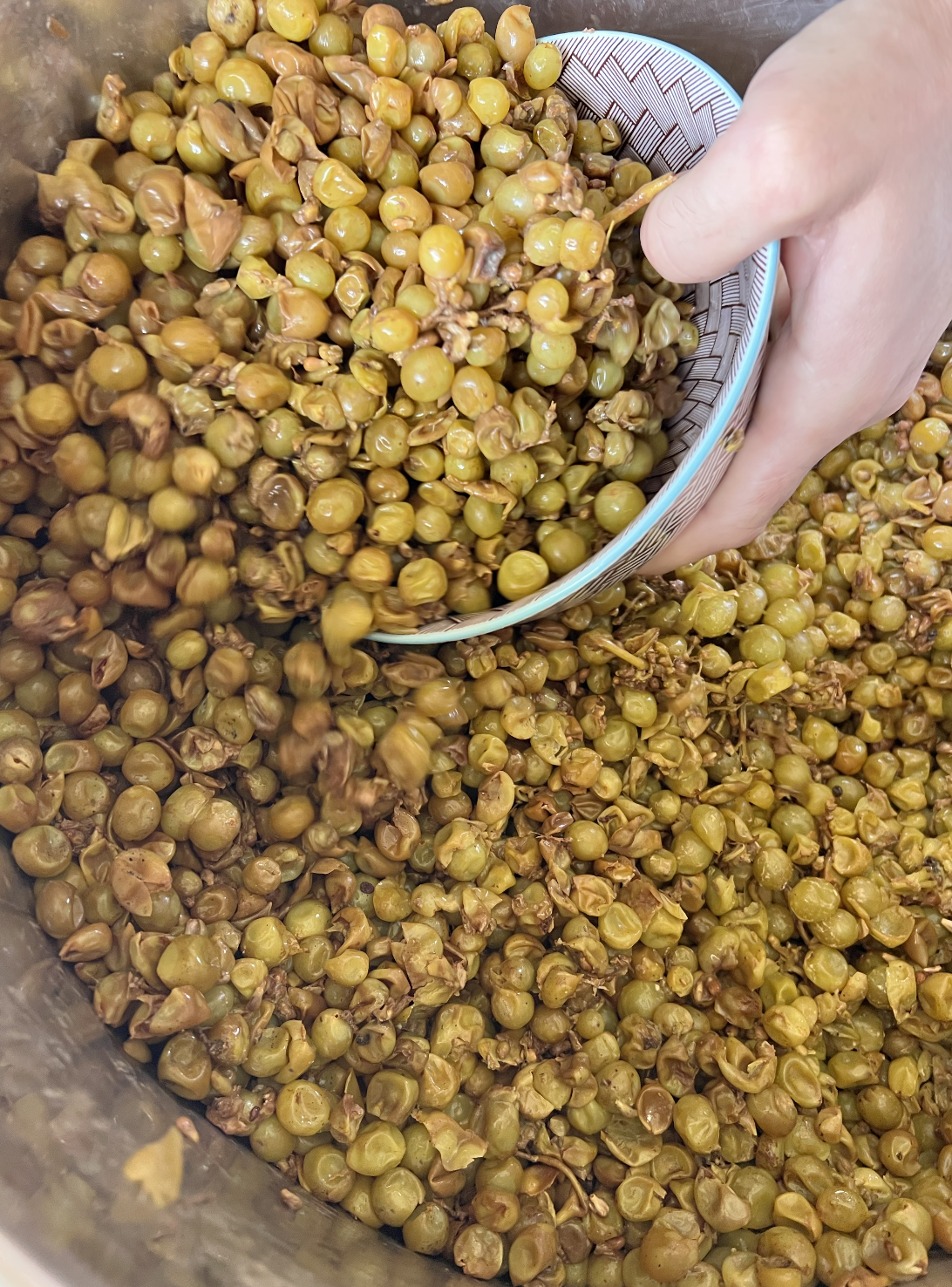
The fermentation is slow. Sometimes seven days. Sometimes fifteen. There is no timetable to follow, only a process to accompany.
Maintaining the right temperature becomes an act of care rather than control. Every day, Massimiliano walks into the cellar, not to interfere but simply to observe.
"I go every day to check on them," he says. "I talk to them."
The fermenting wine bubbles softly inside the vessel, the effervescent sound is a reminder that unseen work is underway. The cellar fills with a rhythm of its own. Eventually, the bubbling grows quieter. One day, it stops altogether.
Only then is the wine ready to move.
This is where another ritual begins.
The wine is carefully transferred from one vessel to another through travasi— the gentle transfer filters the wine naturally. A process that allows it to continue settling without disturbing its natural evolution. Chetna accompanies this ritual with music. Mantras drift through the cellar as the wine slowly changes vessels, one ancient rhythm meeting another.
"Resting in the ancestral cellar,
aligned with the phases of the lunar dance.
Caressed by the gentle tunes of mantras."
Even light and temperature become collaborators. Rather than accelerating the process, they are carefully moderated, allowing the wine to find its own pace. Every decision seems guided by the same principle: interfere only when necessary.
Listening to Chetna describe it, I couldn't help thinking how rarely we allow anything in our own lives to mature this way.
We check.
We optimise.
We measure.
We intervene.
We mistake constant attention for care.
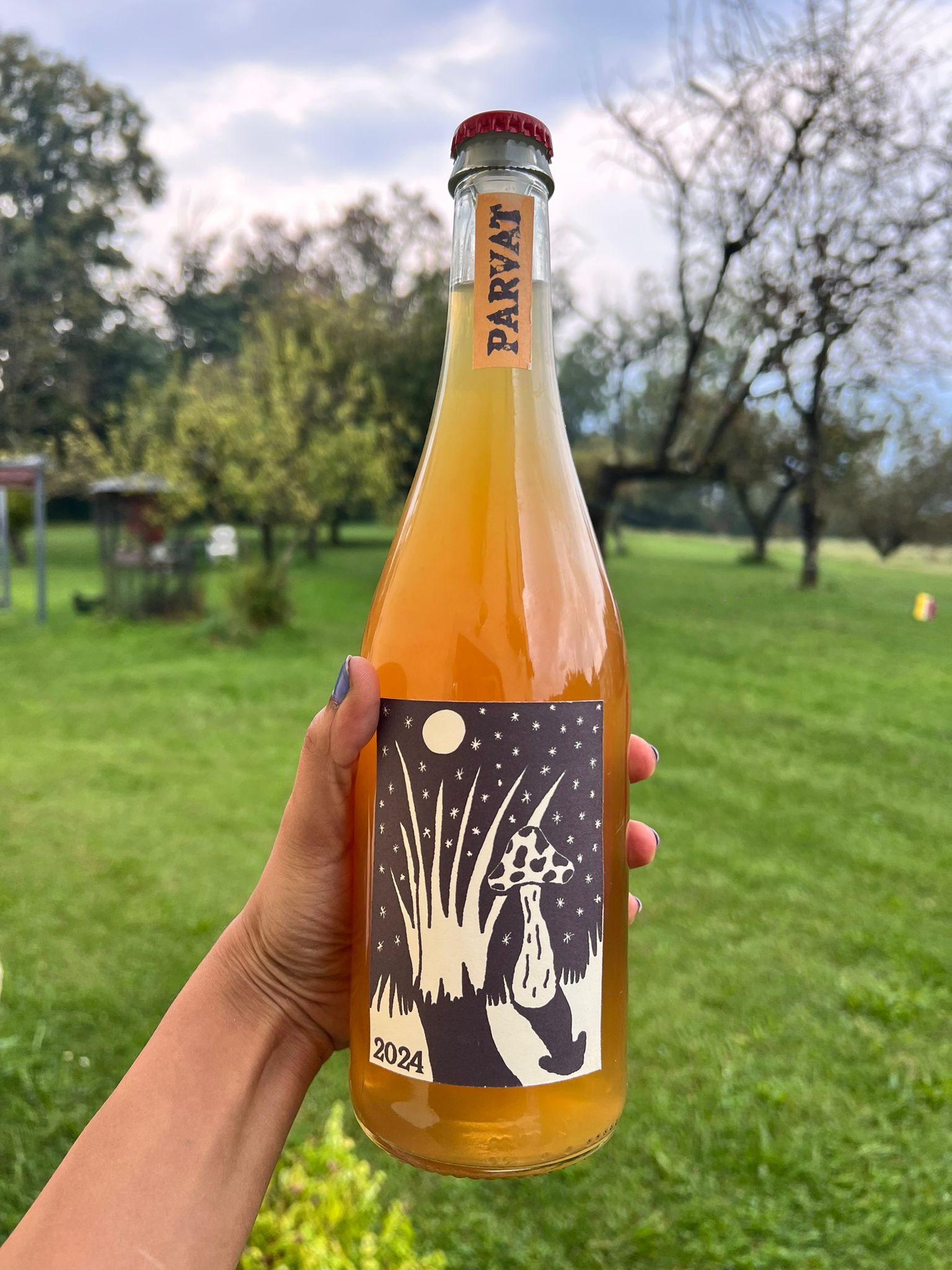
Natural wine proposes something different.
It begins with the body—hands sticky with juice, feet on soil—but it finishes somewhere beyond us. Once the conditions have been prepared, the transformation belongs to countless invisible collaborators: wild yeasts, microbes, gravity, darkness, temperature and time.
"You can guide the process," Chetna tells me, "but never control it."
For her, making natural wine opened something ancient. A sense of lineage. Of working with time instead of against it. A reminder that slowness too carries intelligence in its momentum. ,
For Massimiliano, it taught him something simpler.
How to wait.
"You have to accompany the wine," he says. "You can't rush it. Fermentation is going to take the time it needs, and you'll only know it's finished if you've been patient enough to observe it."
He adds, "I guess it's a metaphor for life and nature. You can try to fight them, but nature and time will always take their own course."
Perhaps that is the simple lesson hidden inside every bottle of natural wine.
We spend much of our lives believing that progress comes from doing more. But the vineyard suggests another possibility: prepare with care, participate wholeheartedly, then know when to step aside.
The unseen work cannot be forced.
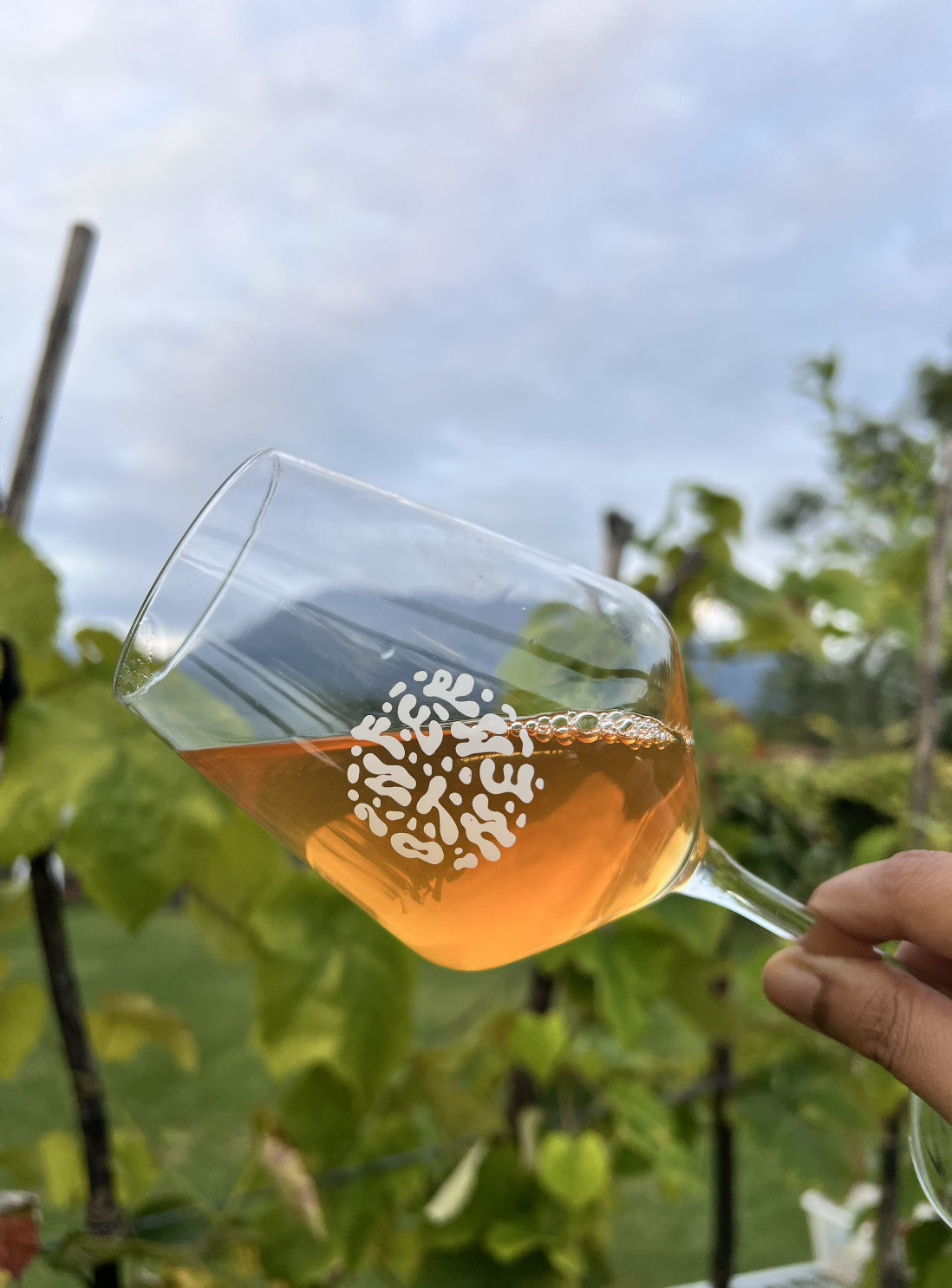
A scintillating amber nectar,
oozing with the atoms of love and passion.